MACHINING & SECONDARY OPERATIONS
From Near-Net Shape to a Finished Component
One of the advantages of powder metallurgy is the ability to manufacture complex components at or near their final geometry. However, some applications require additional processing after sintering to achieve final dimensions, add features, modify material properties, improve surface characteristics, or prepare the component for assembly.
Proform provides a range of secondary operations through a combination of in-house manufacturing capabilities and qualified specialized processing partners. By managing these processes as part of the complete production program, Proform can provide customers with finished, production-ready powder metal components without requiring them to coordinate multiple suppliers.
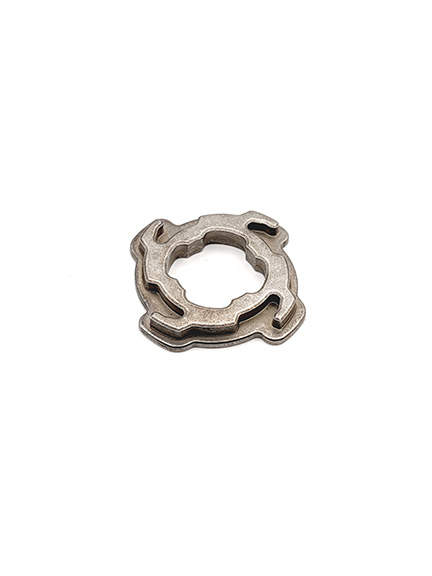
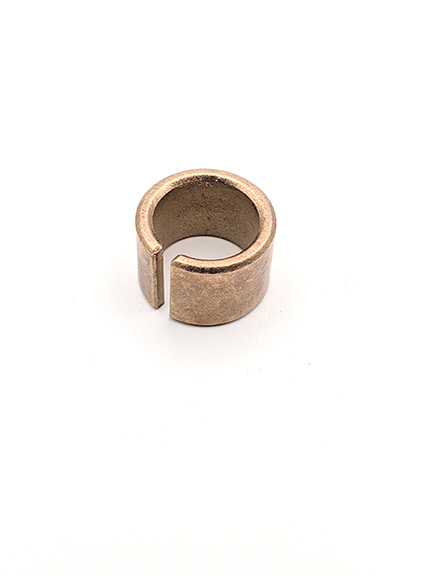
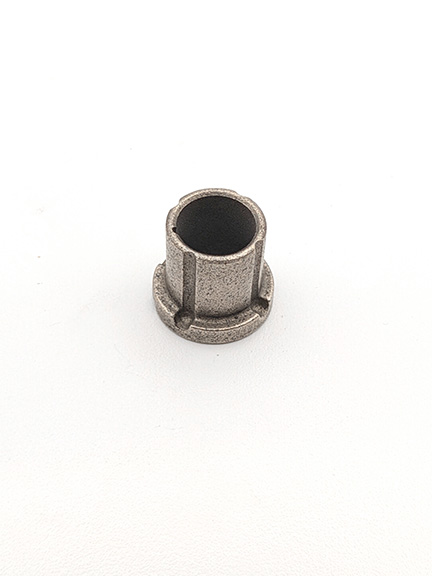
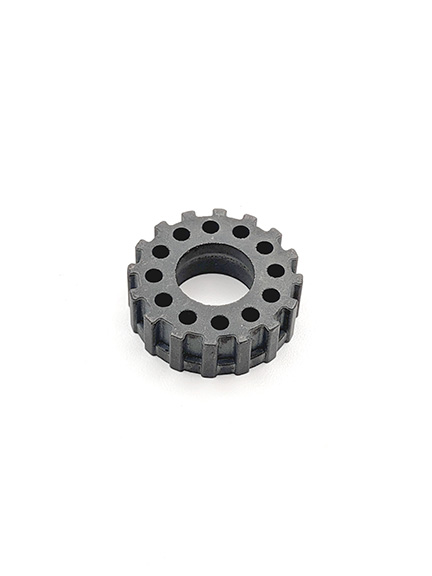
In-House Secondary Operations
Proform maintains several important secondary operations within our manufacturing facility, allowing components to move efficiently from sintering through finishing, inspection, and final production.
Sizing
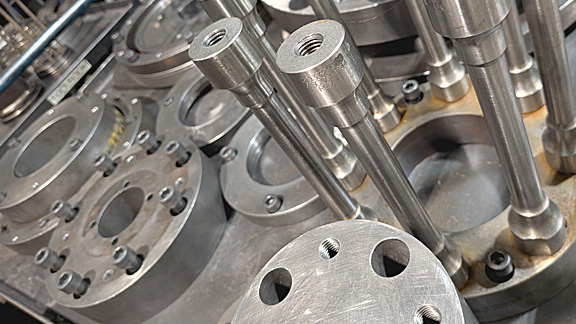
Sizing is a secondary pressing operation used after sintering to improve dimensional accuracy and control critical features of a powder metal component.
The sintered component is placed into precision sizing tooling and re-pressed to achieve the required dimensional characteristics. Depending on the component and application, sizing can be used to control diameters, improve dimensional consistency, and help achieve tighter tolerances than may be possible through sintering alone.
For high-volume production, sizing provides a repeatable method of improving dimensional control while maintaining the production efficiencies of powder metallurgy.
Deburring & Tumbling
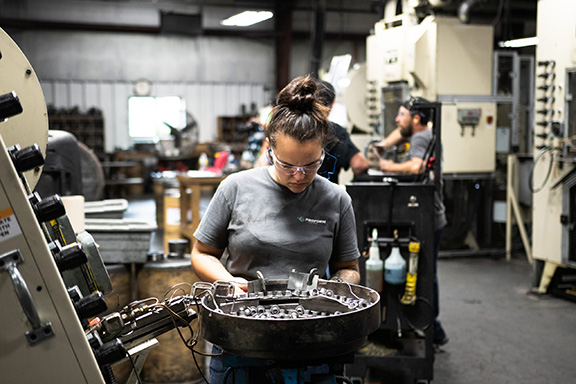
Powder metal components may require additional finishing after sintering or other manufacturing operations. Proform performs deburring and tumbling in-house to remove unwanted burrs and sharp edges and provide a more consistent finished component.
The appropriate finishing process depends on part geometry, material, and final application requirements.
Assembly
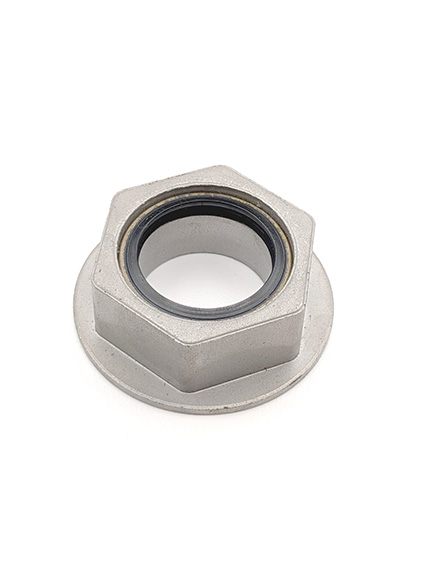
When an application requires multiple components or additional assembly prior to shipment, Proform can perform assembly operations in-house.
Providing assembly as part of the manufacturing program can reduce the number of operations customers need to manage after receiving their parts and allows Proform to deliver a more complete, production-ready component.
Specialized Secondary Operations
Some powder metal applications require manufacturing processes that are best performed by specialized processors.
Proform works with qualified manufacturing partners to coordinate these operations as part of the overall production program. Rather than requiring customers to manage separate suppliers, Proform can coordinate processing, scheduling, quality requirements, and delivery of the finished component.
Specialized secondary operations include:
CNC Machining
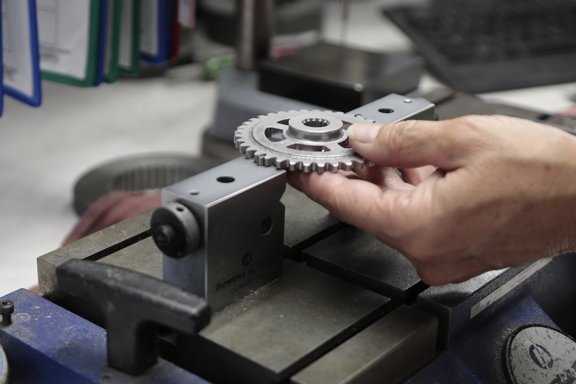
Although powder metallurgy can produce complex components near net shape, certain features may require precision machining after sintering.
Proform coordinates CNC machining through specialized manufacturing partners to add features that cannot be efficiently incorporated during powder metal compaction.
Common secondary CNC operations include:
CNC Milling
Adds flats, slots, pockets, reliefs, and other application-specific features to sintered powder metal components.
Drilling
Adds holes and other features that cannot be incorporated into the initial powder metal tooling or are better produced after sintering.
Tapping
Creates internal threads for fasteners, mating components, and assembly requirements.
Counterboring & Countersinking
Creates recessed or angled features for fastener heads and other assembly requirements.
Grinding
Precision grinding can be incorporated into the manufacturing process when an application requires additional dimensional control or specific finished characteristics beyond those achieved through compaction, sintering, or sizing.
Proform coordinates grinding operations through specialized processing partners based on the requirements of the finished component.
Heat Treatment
Heat treatment can be used after sintering when a powder metal component requires specific mechanical or material properties for its intended application.
Proform coordinates heat-treatment requirements with specialized processors as part of the overall manufacturing program.
Steam Treatment
Steam treatment is a post-sintering process available for powder metal components requiring specific surface or performance characteristics.
When required by the application, Proform coordinates steam treatment through specialized processing partners and incorporates the operation into the component’s overall manufacturing plan.
Resin Impregnation
The interconnected porosity inherent to powder metallurgy can be beneficial or undesirable depending on the function of the finished component.
When an application requires porosity to be sealed, Proform can coordinate resin impregnation through specialized processing partners. Resin enters and seals interconnected pores within the powder metal component to support applications with specific sealing requirements.
This is fundamentally different from oil impregnation, where the controlled porosity of a bearing or bushing is intentionally filled with lubricant to provide self-lubricating performance.
Plating & Surface Finishing
Some applications require an additional surface treatment after powder metal manufacturing.
Proform can coordinate plating and related surface-finishing processes through specialized partners based on the material, component geometry, operating environment, and application requirements.
Near-Net Shape + Targeted CNC Machining
Converting a machined component to powder metal does not necessarily mean eliminating machining entirely.
For some components, the most efficient manufacturing approach is to produce the majority of the geometry through powder metal compaction and then machine only the features that require additional precision or cannot practically be formed during compaction.
This combination of near-net-shape powder metal manufacturing and targeted CNC machining can reduce the amount of material removed, shorten machining time, reduce scrap, and improve production efficiency while maintaining the critical features required by the application.
For higher-volume components traditionally produced primarily through machining, Proform can help evaluate whether a powder metal manufacturing approach could provide a more efficient production solution.
Secondary Operations as Part of the Complete Process
Secondary operations are not treated as an isolated step at Proform. They are incorporated into the complete manufacturing plan for the component.
Our powder metal manufacturing process can include:
1. Tooling Selection & Machine Setup
The appropriate tooling and production equipment are selected and prepared for the component.
2. Powder Metal Selection
Material is selected based on the mechanical, dimensional, wear, environmental, and application requirements of the finished part.
3. Compaction
Metal powder is pressed under controlled pressure to form the component’s initial geometry.
4. Sintering
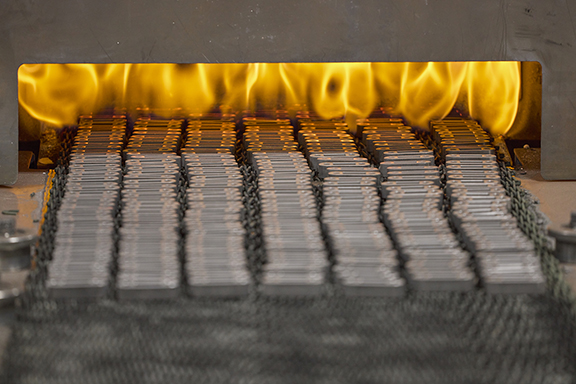
Compacted components are heated in a controlled atmosphere to metallurgically bond the powder particles and develop the required material properties.
5. Secondary Operations
Sizing, deburring, assembly, CNC machining, grinding, heat treatment, steam treatment, resin impregnation, plating, and other required processes are incorporated into the manufacturing program.
6. Oil Impregnation
For self-lubricating bronze bearings, bushings, flange bearings, sleeve bearings, thrust washers, and other components, controlled porosity can be impregnated with an appropriate lubricant based on application requirements.
7. Packaging & Shipping
Finished components are inspected, packaged, and prepared for shipment based on customer and application requirements.